|
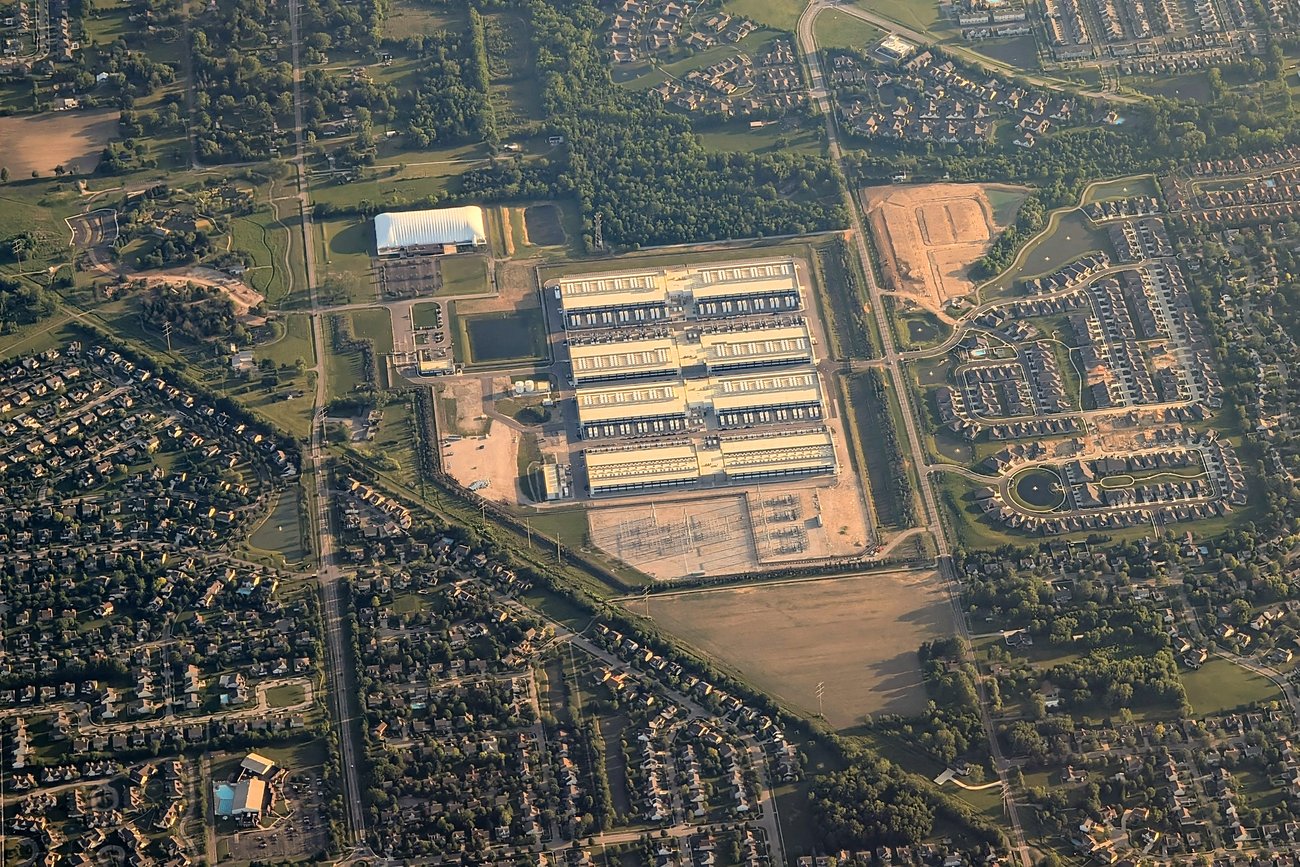
As Karen Bucher, standing on her front porch, started to describe the noise she said keeps her and her husband up at night, a massive boom thundered across the few remaining fields around their subdivision in Licking County, Ohio. The Buchers’ home is one of 37 in a loop around Bermuda Drive, now surrounded by data centers and construction sites owned by Meta, Amazon, and Microsoft, as well as a massive microchip factory being built by Intel. The Buchers and their neighbors are the last holdouts here in the New Albany epicenter of Ohio’s tech and data center boom, but within a year, they said, they too will leave, and all their homes will be demolished.
Karen, a former teacher, and her husband Denton, a former union pipefitter, said they purchased this home more than two decades ago when they retired, moving from Toledo to spend summers here outside Columbus, near to their son. For months, they said, they have been negotiating with representatives of the New Albany Company, owned by billionaire Leslie Wexner, to sell their home. The rumor, they said, is that Meta wants this land too. The tech giant already owns the parcels directly east and north of the neighborhood through a subsidiary LLC, where it has rapidly constructed at least 12 data centers in tentlike structures since last September.
While they said the exact move-out date is yet to be determined, the Buchers are already going through their basement, packing up 23 years of life in this home. As neighbors negotiated individually or in groups, they said, they have been subject to a nondisclosure agreement preventing them from discussing prices, a common practice employed by companies hoping to develop in the area.
But the payoff looks set to be huge. The two homes directly behind theirs posted sales this month to an LLC owned by the New Albany Company for $1.18 million and $1.35 million, respectively, between $600,000 and $700,000 per acre. Those parcels resemble the two-acre plot the Buchers purchased for just over $100,000 per acre in 2003, which was valued by the county auditor this year at just $442,300.
The Buchers said they no longer want to live here, surrounded by the data center noise and construction dust. But despite the financial benefit, they also feel forced out.
Underlying the data center boom that has spread across the United States is a very tangible new land market, full of winners and losers. In the fastest-developing areas, like the branded “Silicon Heartland” of Central Ohio, small landowners and homeowners are trying to figure out how to either profit and get out, or fight to stay in their homes. Meanwhile, large investors like Wexner’s New Albany Company make huge profits assembling construction-ready land. And as data centers have become a key political issue, including in the critical upcoming Ohio governor and Senate elections, questions of property tax breaks also tied to the land may be key for who wins and who loses. |