|
The Founding Fathers had a finely honed sense of the corroding power of corruption. They wrote prohibitions on self-enrichment and the pull of bribery directly into the Constitution on three separate occasions, banning foreign and domestic gifts, changes to presidential compensation during one’s period in office, and appointments for members of Congress that could be remunerative. They believed that someone treated well by a foreign potentate or stateside special interest would be naturally inclined to benefit them, if even unconsciously, and that a wall needed to be constructed to guard against this.
That the Supreme Court has directly or indirectly nullified these one by one is a tragedy. But the court of public opinion, at least as mediated by gatekeepers of information, has also separated what counts as corruption from what counts as a political scandal. Donald Trump personally earning $1.4 billion from a family cryptocurrency business that benefits from his administration’s lenient crypto policies (much of those crypto purchases coming directly from a foreign government) is less well known to the public than whatever wild thing he said on his personal social media site the night before.
By the same token, Marjorie Taylor Greene is a household name, and Darializa Avila Chevalier will soon be, because of what they say, or once said. Thomas Daffron is not a household name.
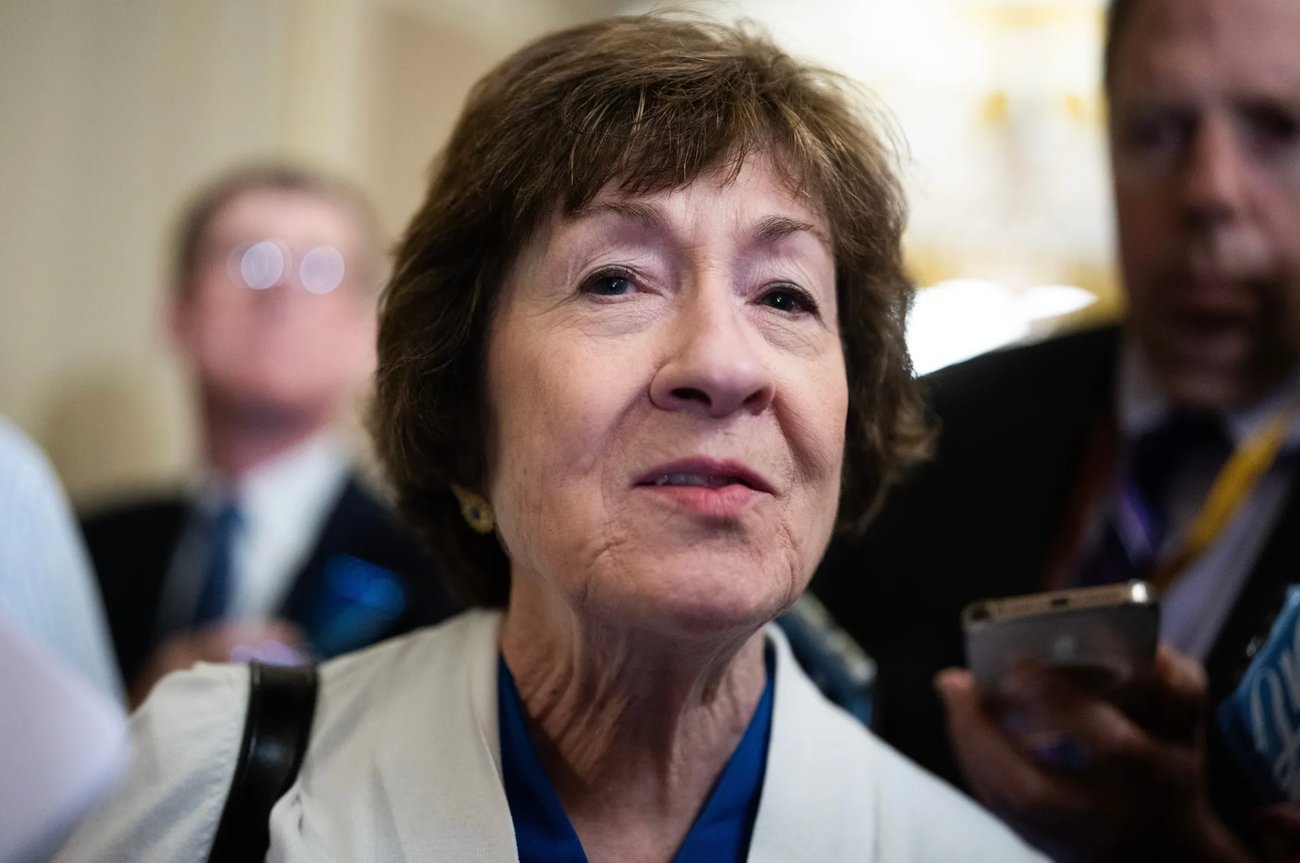
Daffron is Susan Collins’s husband. He was also a registered lobbyist and eventually became chief operating officer of a K Street consulting firm named Jefferson Consulting, prior to and after marrying Collins. This firm received $76 million in government contracts for acquisition and improvement consulting during Daffron’s tenure from 2006 to 2016. Much of it came after he became COO, and especially after Collins wrote a contracting reform bill in 2007, parts of which boosted Jefferson Consulting.
Some of the connections appeared rather clear. To use one example, the Collins bill required a strategic plan for acquisition at the Federal Acquisition Institute, and Jefferson billed the Federal Acquisition Institute for its strategic plan. This pattern repeated; the bill put in rules mandating precisely the services Jefferson Consulting provided.
This is not a new revelation. It was released on the eve of Collins’s last re-election campaign six years ago. Collins’s response was that Daffron, the man she has been married to since 2012 and has known since the 1970s, never officially lobbied her. Collins won re-election and that was that, until her Democratic opponent for Senate this year, Graham Platner, brought it up as part of an anti-corruption agenda he released a week ago. He proposed the “Collins Rule”: Any senator whose spouse or the firm where they work receives government contracts should have to recuse themselves from voting or oversight work on that contract.
Collins was apoplectic. She tweeted that the claim was “outrageous and false,” and that she was defamed as a criminal. (Platner replied that he didn’t say it was criminal, but that it should be.) She sent her campaign manager to stand outside Platner’s press event and rebut the charges. The campaign manager said that money is delivered to contractors through the executive branch and not the Senate, eliding the fact that the bill Collins wrote benefited the firm her good friend and future spouse worked at.
For six years, this has been a nonstory, because we don’t have a political culture that imprints this kind of financial machination and leveraging of political power as a scandal. It’s either too complicated or just politics, and people move on.
Scandals are reserved for old internet comments and personal failings. Of these, Platner has plenty. When I talked to him last week, I mentioned that he’s become like a figure in Homer’s epics who is always preceded with an epithet: the “scandal-plagued” Graham Platner.
He’s talked about these scandals countless times, and I don’t need to rehash them here. But you can believe both that personal character is important in assessing elected officials and make room within that definition of character to cover how their actions in office affect their personal bank accounts.
“We’ve been working within a political system that for so long now, this form of self-dealing and self-enrichment has become intrinsic to the system itself,” Platner told me. “A lot of people who cover this stuff have created this framework in which that kind of thing is not even worthy of discussion … We write off actual scandal, legalized corruption, because we’ve been so immunized to it.”
This may seem solely like a media critique, and yes: It’s partially that. Headlines like “Platner Tests Democrats’ Tolerance for Scandal” are rarely matched by ones like “Collins Tests Republicans’ Tolerance for Self-Dealing.” But that takes everyone but the media off the hook. |